
Hi my friend!
We all know AI has changed how things work by now. That's not news.
But here’s one thing I don’t think enough of us are actually tracking: 60% of AI prompts are 10+ words. Meanwhile, a lot of us are still checking rankings for traditional keywords that are two-three-four words.
And that gap matters more than it sounds.
Because people using those long, specific prompts are ready to make decisions.
Let’s say, “best CRM for a 10-person agency with HubSpot integration” is something a person would search, or ask AI, when they’re about to buy.
So, what’s the shift?
Instead of asking “what are people searching for?” ask, “what questions are people actually asking, in their own words?”
The problem is, traditional keyword tools rarely show you this kind of data.
So, where do you get this data?
It’s hiding in your sales calls and support tickets. It's in random Reddit threads where someone types out the full, specific, slightly desperate version of their problem.
You can even find it by scrolling through the comment sections of your competitors’ social media posts.
The tools we've relied on for years are great for capturing search volume, but they're terrible at capturing intent. If you want to win in an AI-driven world, stop optimizing for algorithms and start optimizing for real human conversations.
Want a step-by-step roadmap to put this into action?
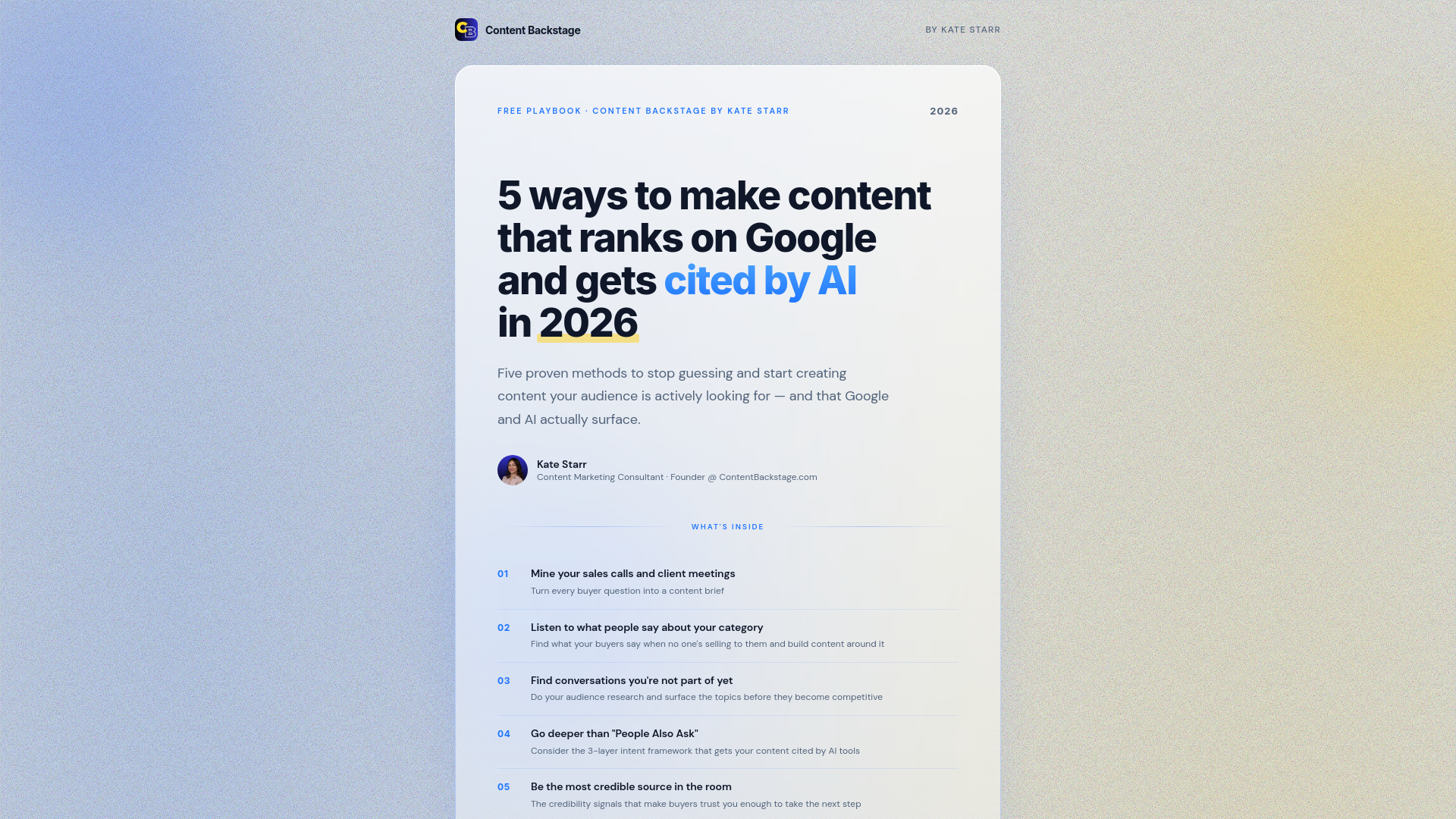
I put together a free resource that breaks down exactly how to do this: Content for AI Search — Free Playbook
Inside, you'll learn:
How to extract high-converting content ideas directly from your client conversations, before you ever open a keyword tool
The exact framework to find out what your buyers say when no one's trying to sell to them
How to turn emerging, desperate niche questions into content before anyone else does
The secret to getting your content cited by AI tools, not just indexed
If you’re interested in starting a newsletter like this, try out beehiiv (that’s what I use).
See you next week,
Kate 🌟
